
If you’ve hit your 40s and noticed that staying in shape feels harder than it used to, you’re not imagining it. The frustrating truth is that your body genuinely does change as you get older — but the good news is that understanding why puts you firmly back in control. Here’s what’s actually happening to your metabolism after 40, and more importantly, exactly what you can do about it.
What Is Your Metabolism, Really?
Your metabolism is simply the process by which your body converts food and drink into energy. Even when you’re sitting still, your body is burning calories to keep your heart beating, your lungs breathing and your organs functioning. This is called your Basal Metabolic Rate (BMR) — and it’s the foundation of how many calories you burn each day.
The problem? Your BMR naturally decreases as you age.
Why Does Metabolism Slow After 40?
There are several reasons this happens, and they tend to compound each other:
Muscle loss (Sarcopenia) — From around the age of 30, we begin losing muscle mass at a rate of roughly 3–8% per decade if we don’t actively work to maintain it. This matters enormously for your metabolism because muscle is metabolically active tissue — it burns calories even at rest. Less muscle means fewer calories burned throughout the day, even if your diet and activity levels stay exactly the same.
Hormonal changes — For women, the approach of perimenopause and menopause brings a drop in oestrogen, which can lead to increased fat storage, particularly around the abdomen. For men, testosterone levels gradually decline from the mid-30s onwards, which affects the body’s ability to build and retain muscle. These hormonal shifts have a direct impact on body composition and metabolic rate.
Reduced physical activity — Life gets busier in your 40s. Careers, families, responsibilities — all of these can quietly reduce how much you’re moving each day without you even noticing. Less movement means fewer calories burned.
Changes in sleep quality — Sleep tends to become lighter and less restorative as we age, and poor sleep is directly linked to slower metabolism, increased appetite and a greater tendency to store fat.
What Can You Do About It?
The most important thing to understand is that a slower metabolism is not inevitable — or at least, its impact doesn’t have to be. Here’s what actually works:
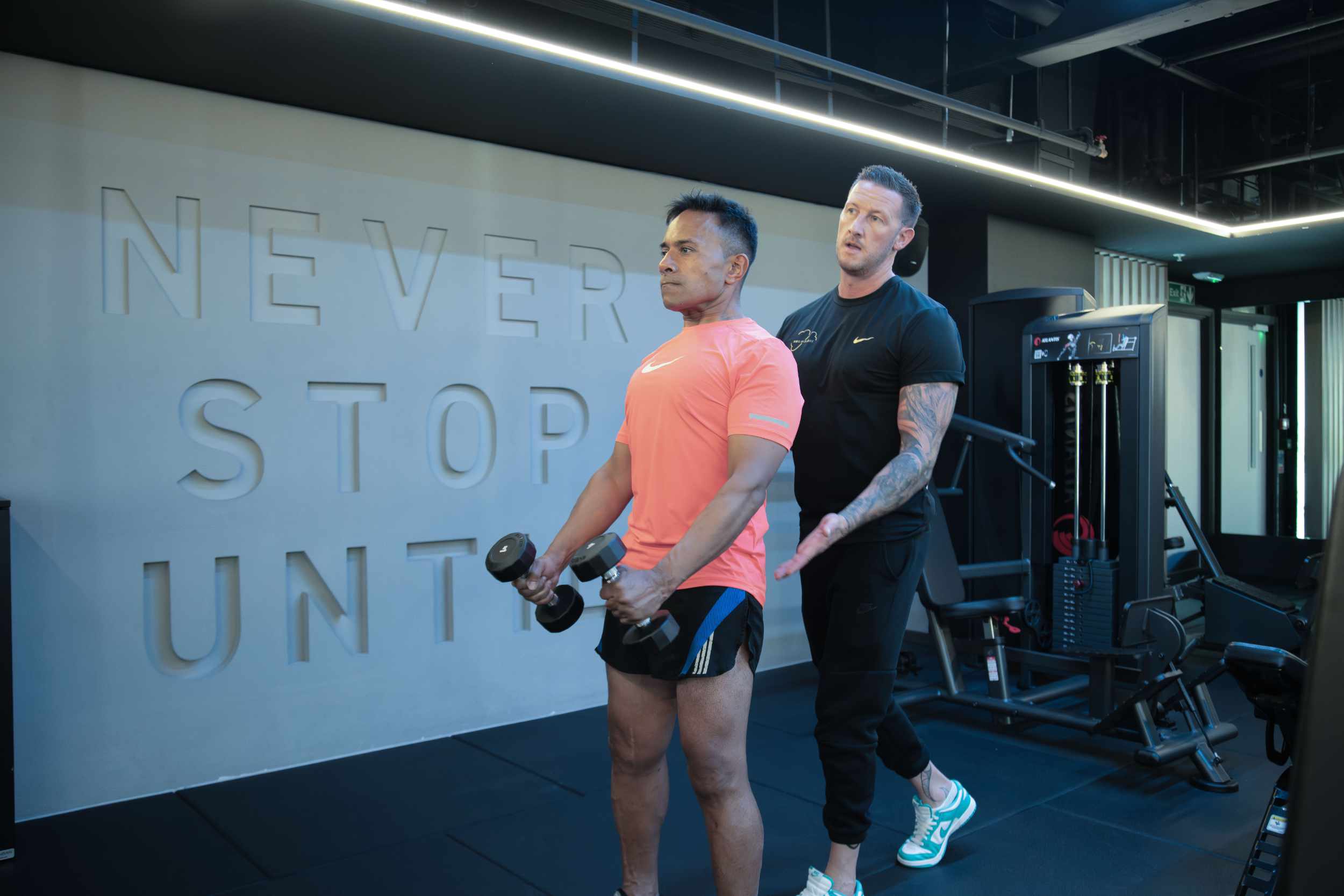
1. Prioritise strength training This is the single most effective thing you can do. Lifting weights — or any form of resistance training — builds and preserves muscle mass, which directly boosts your resting metabolic rate. You don’t need to become a bodybuilder. Two to three sessions per week of well-structured resistance training can make a transformative difference to how your body looks, feels and functions.
2. Increase your protein intake Protein is the building block of muscle. After 40, your body becomes slightly less efficient at processing protein, which means you actually need more of it to maintain muscle mass. Aim for a good source of protein at every meal — eggs, chicken, fish, Greek yoghurt, legumes. This also helps you feel fuller for longer, reducing the likelihood of overeating.
3. Stay as active as possible throughout the day Formal exercise is important, but so is general movement. Take the stairs, walk to the next tube station, get up from your desk regularly. These small habits accumulate into significant calorie burns across a week.
4. Protect your sleep Getting 7–8 hours of quality sleep isn’t a luxury — it’s a metabolic necessity. Prioritising your sleep will support healthy hormone levels, reduce cravings and help your body recover properly from exercise.
5. Work with a professional A personal trainer who understands the specific physiological changes that happen after 40 can design a programme that works with your body rather than against it. Generic gym programmes designed for 25-year-olds simply aren’t optimised for where you are right now — and that’s not a weakness, it’s just biology.
The Bottom Line
Your metabolism slowing after 40 is real, but it is far from a life sentence. With the right approach to exercise, nutrition and lifestyle, you can not only slow that decline but in many cases reverse some of its effects entirely. The clients I work with at NMG Fitness regularly tell me they feel fitter, stronger and more energetic in their 40s and 50s than they did in their 30s — and that’s not an accident.
If you’re ready to take back control of your fitness and feel the best you’ve felt in years, I’d love to help. Get in touch today and let’s book in your free first session.
Neil McGuigan is a London-based personal trainer with 18 years experience, specialising in fitness for men and women over 40. He trains clients at UNTIL gym in Soho and Marylebone, and online.