High and Low Blood Pressure After 40: What Everyone Should Know
High blood pressure usually has no symptoms. Here’s what the numbers mean, how to get checked for free, and how walking and strength can help.
In this article
I train a lot of men in their 40s and 50s who look fit and feel fine, and some have never had their blood pressure checked. That worries me, because high blood pressure doesn’t feel like anything.
What do the numbers mean?
Your reading has two numbers, like 120 over 80. The top one is the pressure when your heart beats. The bottom one is the pressure between beats. Between 90/60 and 120/80 is ideal. Between 120/80 and 140/90 is higher than ideal, and worth acting on now. At 140/90 or above it’s high.
One reading doesn’t tell you much. Pressure goes up and down with stress, caffeine and exercise, so your GP will usually repeat it or ask you to check at home.
Why it matters
High blood pressure puts constant extra force on your arteries and heart. Over the years that raises your risk of stroke, heart attack, heart failure and kidney disease. Around 1 in 3 adults in England has it, and about 3 in 10 of those people don’t know. That’s roughly 4.2 million people. About half a million of them are men aged 55 to 64.
Who’s more likely to get it
It creeps up with age, so your 40s and 50s are when to start paying attention. You’re more at risk if you:
- have a parent or sibling with high blood pressure, heart disease or stroke
- carry extra weight, especially around the middle
- eat a lot of salt or drink above 14 units a week
- don’t move much, sleep badly or live with a lot of stress
- smoke, or have diabetes, sleep apnoea or kidney problems
It’s also more common in people of Black African and Black Caribbean backgrounds. But being fit and slim doesn’t make you immune. Plenty of fit men have it.
Symptoms: usually none
Most people feel completely normal. Now and then it causes headaches, blurred vision or nosebleeds, but those have other causes too. Don’t wait for symptoms.
If your pressure is very high (180/120 or above), contact your GP or NHS 111 the same day. If it comes with chest pain, severe breathlessness, confusion, a severe headache, or face drooping, arm weakness or slurred speech, call 999.
How to get checked
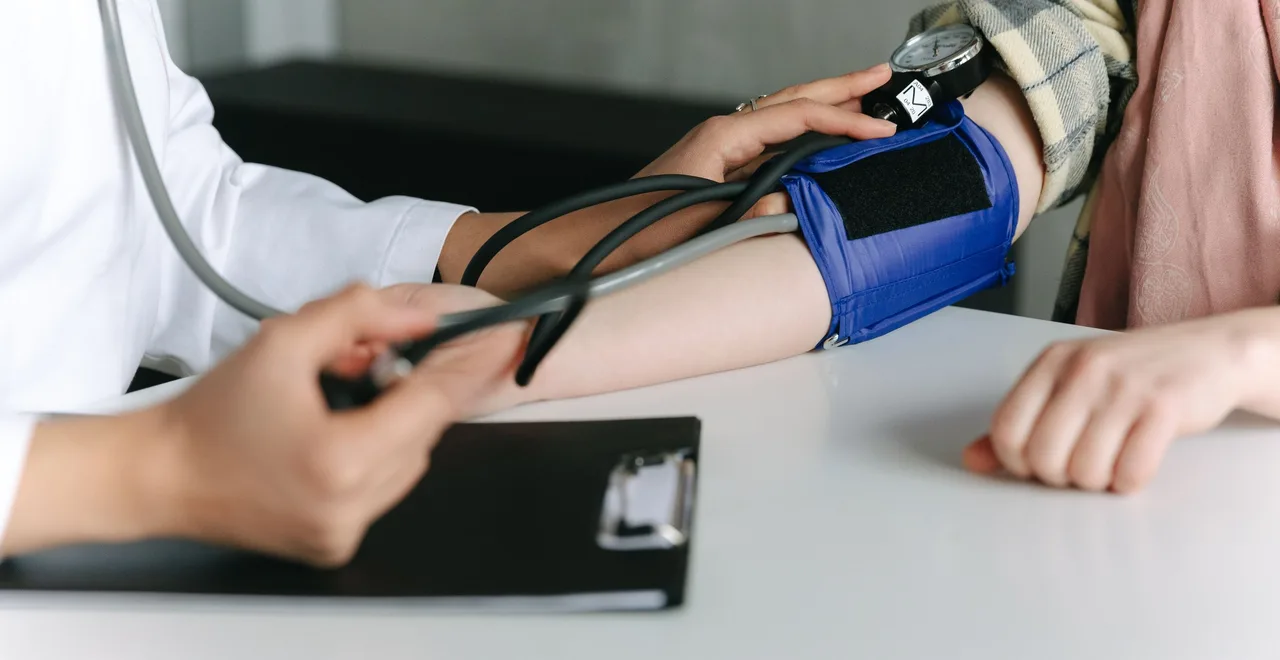
If you’re 40 or over, ask at a local pharmacy. Many offer a free check in England, and you often don’t need to book. Your GP surgery can do one too. Between 40 and 74 you should also be invited to an NHS Health Check every five years.
If it’s high, don’t panic. Your GP will normally ask you to check again, sometimes at home for a week, before deciding what to do. Bring a list of any medicines you take and any family history.
How to check at home
Buy a validated upper-arm monitor. Wrist ones are less reliable. Sit quietly for five minutes with your back supported, feet flat and your arm resting on a table. Take two readings a minute apart. Do it morning and evening for about a week and take the diary to your GP.
The usual mistakes are checking straight after a coffee or a walk, talking while it’s measuring, crossing your legs, and checking five times a day until you’re anxious. Don’t change your tablets because of one reading.
What brings it down
You don’t need a special diet. A few things, done regularly, do most of the work.
- Cut the salt. Aim for no more than 6 g a day, about a teaspoon. Most of it hides in bread, bacon, ham, cheese, soups, sauces and ready meals, not the salt shaker. On a label, more than 1.5 g per 100 g is high.
- Keep alcohol to 14 units a week or less, spread over a few days.
- Eat more fruit and veg, and keep an eye on your waistline.
- Sleep well, and find a way to switch off. Poor sleep and ongoing stress keep pressure higher.
- If you smoke, get help to stop. Your pharmacy can do it for free.
Exercise works
A big 2023 review of 270 trials found every type of exercise lowered resting blood pressure. Wall sits and similar holds came out best, at about 8 points off the top number. Strength training and cardio each took off about 4.5 points. Even a 10 point drop is linked to roughly a fifth fewer major heart and stroke events.
A simple way to start
Start with walking. Do 10 minutes, four days a week, and add five minutes each week until you’re doing 30 minutes of brisk walking, five days a week. Brisk means you can talk but not sing.
Then add a couple of simple strength sessions a week: sit-to-stands, incline push-ups, step-ups, a wall sit and a plank. Keep breathing as you go. Never hold your breath. If your blood pressure is high and hasn’t been treated yet, see your GP before hard training.
It takes a few weeks to see a change, so keep a diary and watch the numbers.
What about low blood pressure?
Below 90/60 counts as low. If you feel fine, it usually needs nothing, and some fit people just run low. See your GP if you get dizzy, faint or unsteady. Stand up slowly, drink enough water and don’t skip meals.
If you’re on medication
Keep taking it. Tablets and lifestyle changes work together. Don’t stop or change the dose because your numbers look good, because that’s usually the tablets working. Tell your GP if they make you dizzy.
Questions to ask your GP
- What’s my average reading, and what should I aim for?
- Do I need any tests?
- Is my medication right for me?
- What exercise is safe for me?
Want help getting started?
If you’d like walking and strength built around your numbers, book a free session and we’ll sort a plan together. Download the free Blood Pressure Guide below.
Frequently asked questions
What counts as high blood pressure after 40?
140/90 or above at the surgery, or 135/85 at home, is high. Between 90/60 and 120/80 is ideal, and between 120/80 and 140/90 is higher than ideal and worth acting on now. Below 90/60 counts as low.
Where can you get a free blood pressure check?
In England, adults aged 40 and over can get a free check at many pharmacies, often with no appointment. Your GP surgery can do one too, and between 40 and 74 you should be invited to an NHS Health Check every five years.
Does exercise lower blood pressure?
Yes. A 2023 review of 270 trials found every type of exercise lowered resting blood pressure. Wall sits and similar holds came out best, at about 8 points off the top number, and strength training and cardio each took off about 4.5 points.
Should you stop blood pressure tablets if your numbers look good?
No. Keep taking them. Tablets and lifestyle changes work together, and good numbers are usually the tablets working. Don't stop or change the dose without your GP, and tell them if the tablets make you dizzy.